
Small voltage error, big brightness error
Most LED drivers control the voltage. The steep U-I characteristic curve of the LED converts tiny voltage variations into large current variations, and the brightness depends on the current.
lumiSENS®
The fully digital technology platform for machine vision lighting.
by evotron · developed and made in Germany
lumiSENS® turns machine vision lighting from a simple light source into an active, data-capable system component. A lumiSENS® module in every light measures what the LEDs really do. A digital controller keeps light, timing and lifetime under control. For the entire life of your machine.
Challenges
Sensors resolve more, interfaces run faster, AI finds ever smaller defects. Yet most lighting is still little more than an array of LEDs powered by 24 V. Nobody knows how bright it really is, how warm it runs or how much life is left. And every image your vision system evaluates depends on that light.
Lighting has stayed the last blind spot of condition monitoring in machine vision.
Most LED drivers control the voltage. The steep U-I characteristic curve of the LED converts tiny voltage variations into large current variations, and the brightness depends on the current.
In capacitor-discharge systems without active control, flash intensity varies with charge level, pulse timing and repetition rate. This directly affects image consistency, especially in high-speed inspection. Without optical feedback, the actual light output remains unknown.
LED output drops as temperature rises and gradually decreases with age. Constant current does not mean constant light. As illumination drifts, inspection thresholds become unreliable, increasing the risk of false rejects and missed defects.
Brightness and timing are found by trial and error at hard-to-reach places, with expertise and repeated adjustments. Replace the light, and the setup starts again. More setup time, more downtime, less reproducibility.
This is how a segmented light is typically wired today. And this is how it looks with lumiSENS®.
The longer the cable, the more inductance it adds, and the more it slows down the current rise in the LEDs. From about 5 m*, signal quality and synchronization noticeably suffer: pulses get smeared, light misses the exposure window and timing becomes uncertain. That is why the lumiSENS® controller sits in the cable, right at the light.
Values at 0.2 m measured on the DCC2404-1WS (2 A, 5 µs pulse, 200 mm cable). Longer cables: schematic model of cable inductance and interference, for illustration.
* For illustration only. The actual signal shape also depends on further physical properties of the cable, such as capacitance, cross-section and shielding.
Technology
Four things happen continuously, in real time, over one standard M8 cable.
A lumiSENS® module inside every light continuously captures LED voltage, current, temperature and light intensity, and streams the data to the controller.
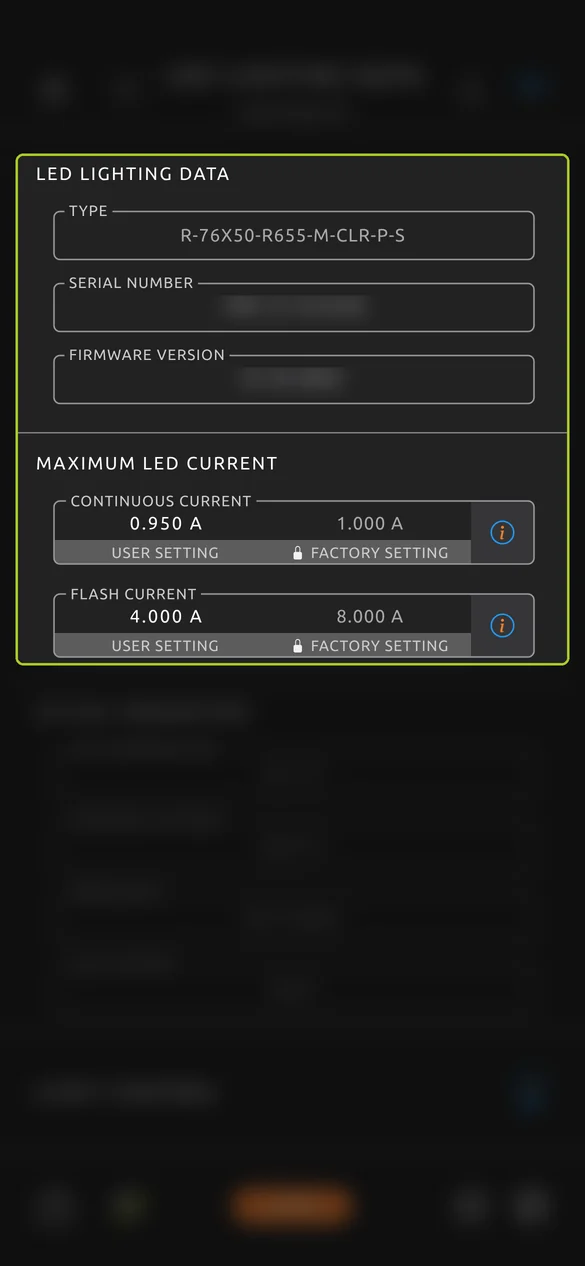
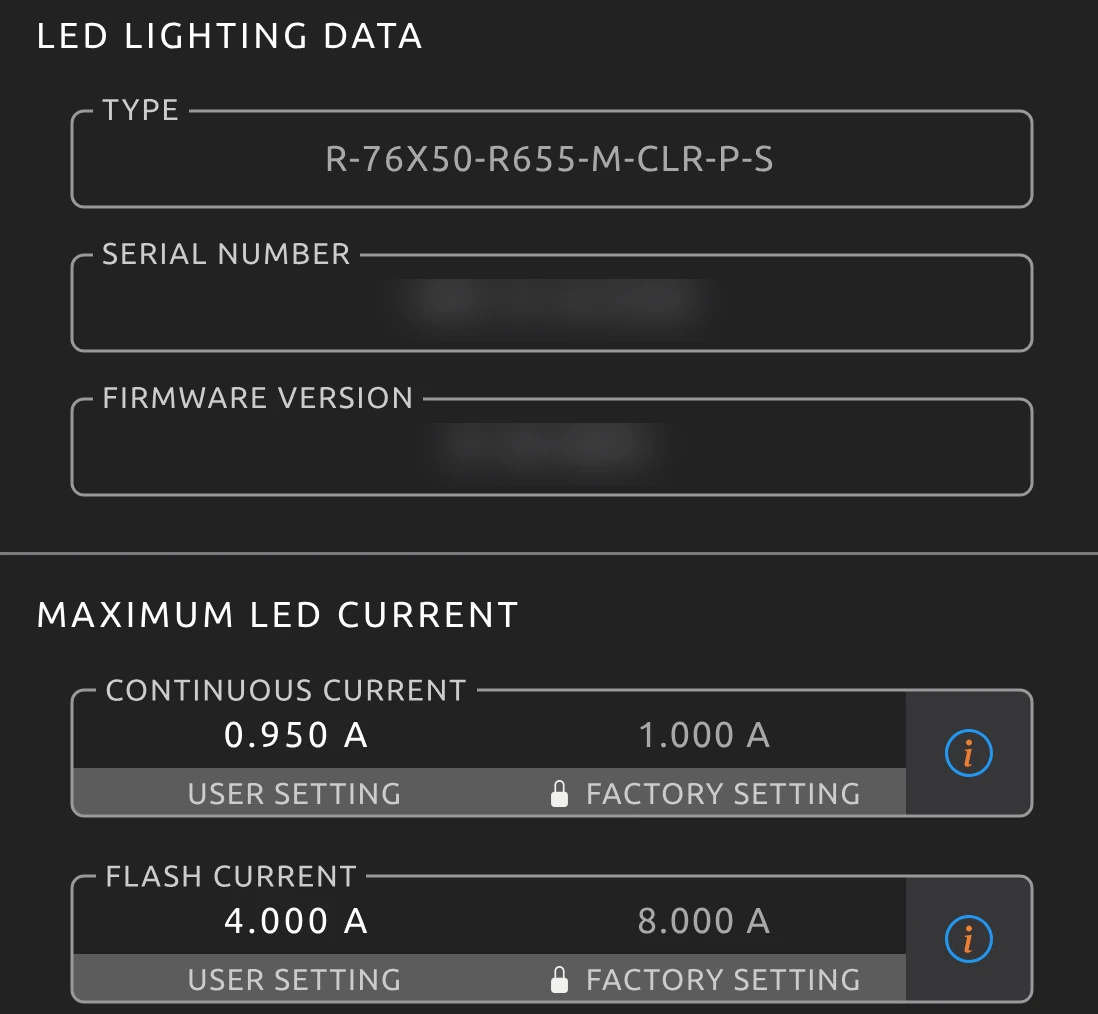
Each light carries its own digital nameplate: a parameter set that describes it electrically, thermally and radiometrically. The parameter set is stored in the lighting itself, so every setting stays documented and traceable. The controller recognizes the lighting, applies its limits and calibrates brightness. A replacement light is recognized automatically.
An FPGA controls the LED current with a resolution of 14 bits and a stable quartz time base. It automatically compensates temperature drift and aging directly within the machine (edge automation) and shapes high-power pulses along characteristic curves within the electrical, thermal, and optical limits of the LEDs. Gallium nitride power stages do this with an efficiency of up to 98% — all within a controller the size of a cigar.
Operating data, warnings, operating hours and remaining LED lifetime are available on the controller display, in the app, via API and as a status signal to the PLC. Lighting becomes visible to condition monitoring, MES, predictive maintenance and industrial AI. lumiSENS® is currently the only Plug & Play lighting technology on the market built for the industrial IoT.
The result: lighting becomes a measured, documented and reproducible part of your vision system.
lumiSENS® fits into existing machine control and IT: standard signals for PLC and camera, a documented JSON REST API for software, and operational data for the Industrial IoT and AI.
Trigger input for 5 V TTL up to 24 V PLC signals, PNP, NPN or push-pull. Status output to the PLC, fast camera trigger and camera supply on the same I/O port.
A documented JSON REST API and a C++ API connect lumiSENS® to your machine software, MES or inspection system. Just ask us for access.
USB-C, galvanically isolated, and industrial WLAN (2.4 / 5 GHz), as access point or in your network.
Voltage, current, temperature, intensity, operating hours and remaining lifetime of every light: the basis for condition monitoring, predictive maintenance and AI analytics.
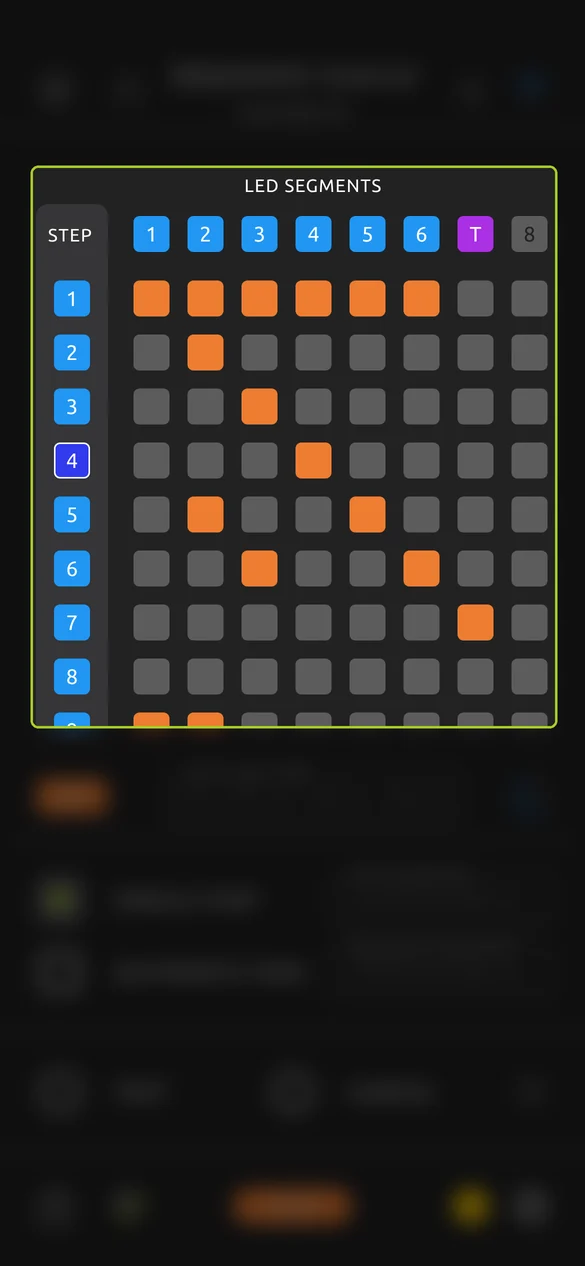
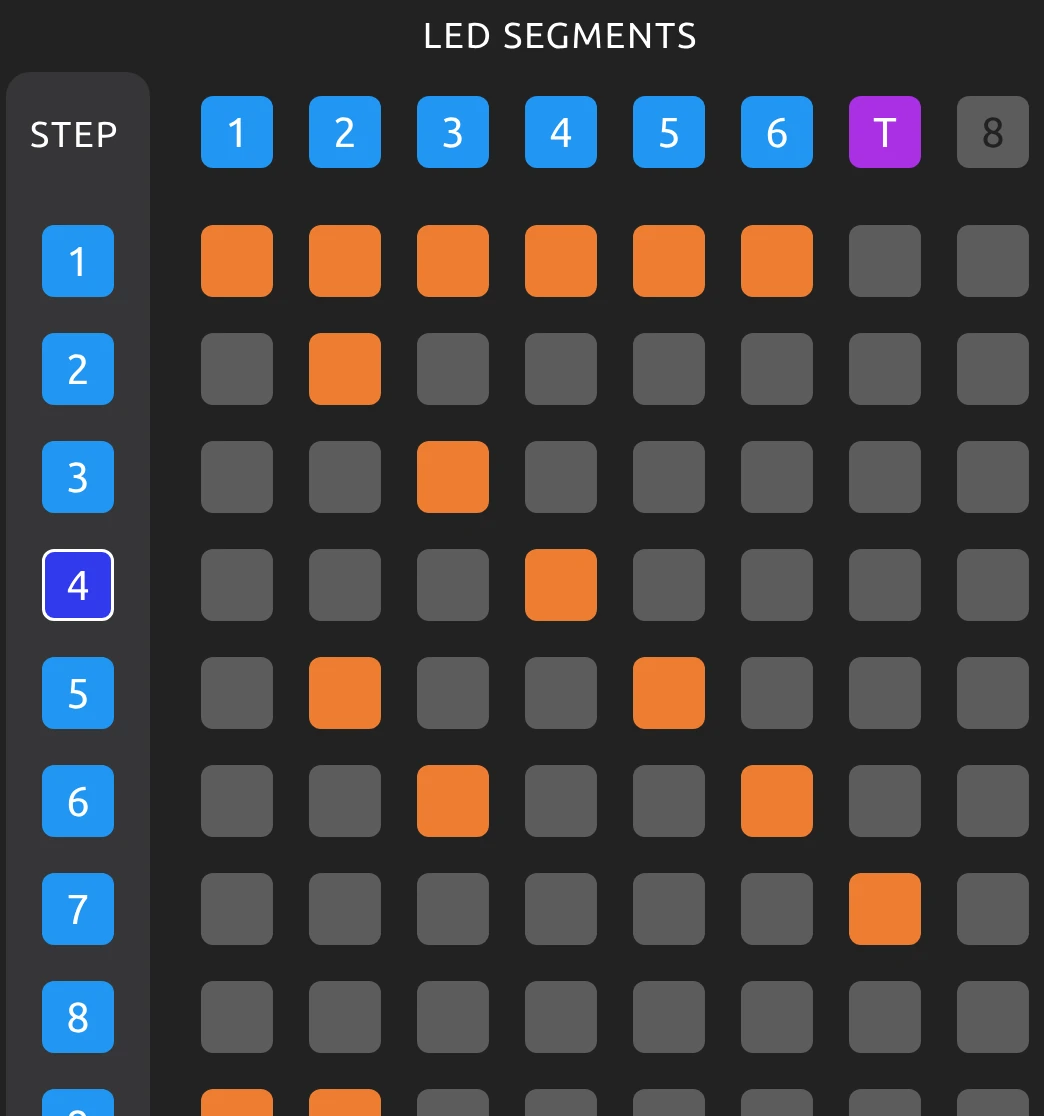
Select the controller, connect, and set every lighting parameter while you watch the camera image. Even complex sequences.


Performance
Figures of the DCC2404-1WS in-cable controller, configured with the DCConfig app.
Consistent over the entire lifetime of the lighting. Light delay, pulse width and camera trigger are set in 20 ns steps. Camera shutter delay can be compensated.
Pulse after pulse. No energy swings like with capacitor discharge.
20 ns resolution, with constant light energy even at 1 µs.
Up to 500,000 precisely timed light pulses per second, for fast moving objects.
Delay from trigger input to light pulse: short, fixed and known. In addition, a fast trigger output for the camera switches in less than 50 ns.
Up to 8 sectors and 16 sequence steps, fully synchronized to image acquisition, from one single-channel controller.
Interference-free trigger distribution via RS-485 over up to 100 m. Under 2 minutes set-up per camera.
Low-loss GaN power stages waste almost no energy. And because the controller sits in the cable, not in the lighting housing, no extra heat reaches the LEDs: they can be driven harder for more light, and they age more slowly.
lumiSENS® measures the LED light output, compensates any drop with current reserve, and warns you early when that reserve runs low. Try it yourself.
Move the sliders and compare both camera images.
Schematic illustration based on typical LED behavior, not measured data of a specific product.
Lexicon · GermanAging and driftHow aging and drift affect lighting and cameras in machine vision.The right color decides which feature your camera sees. lumiSENS® switches between the color channels of multicolor and multispectral lighting while the machine is running, with one single-channel controller and one cable. Pick a color and watch the monochrome camera image change.
A sensor detects the next part, the PLC sends the matching color to the controller, and the RGB light changes color between two parts. The camera always sees the part in its best contrast.
Schematic illustration. The color is set via the controller interface; achievable cycle rates depend on the application.
Schematic spectra with typical LED bandwidths. More wavelengths and beam angles on request.
Standard wavelengths: 440, 450, 455, 465, 520, 624, 625, 645, 655, 660, 730, 860, 940 and 950 nm, white 4000 to 6700 K, RGB 456 / 515 / 635 nm.
Applications
Proven in demanding inspection and measurement tasks. These are typical ones.
Freeze fast moving parts with short, high-energy flashes that hit the exposure window exactly, every time.
Make surface topography visible independent of color and texture, for example embossed Braille. One camera, one segmented ring light, one single-channel controller.
Change the wavelength while the system is running. Multiple color channels controlled by a single-channel controller, which are switched via an app or an API.
RCAM combines camera, lighting and LED controller in one compact robot tool for dynamic image capture during motion.
AI learns from images, and images are made by light. Changing light looks like changing product quality. Constant light keeps it out of AI decisions, and operational data from every light document the lighting conditions.
Stable measurement capability, identical machines from series to series, and retrofit of existing systems with standard cables.
High-speed structure measurement of thin-film solar panels in motion. Twelve cameras and their lights fire in exact synchronization, distributed via RS-485. A demanding challenge that demonstrates what the platform is capable of.
Deep learning inspection, anomaly detection, and AI-based classification all learn from images, and images are made by light. lumiSENS® keeps the light constant and documents it, so your models see the product, not the lighting: faster training, higher accuracy.
Every trigger starts a precisely timed period in the controller: one light pulse and, synchronously, a trigger for the camera. Delays and pulse widths are set in 20 ns steps, so the light lands exactly in the exposure window.
The PLC or an encoder sends the trigger to the controller. The controller fires the light pulse and sends a synchronous TRIGGER-OUT to the camera. Every camera starts its exposure a little after the trigger (shutter delay). Use the two sliders to delay the light pulse and the camera trigger until the light pulse lies completely within the exposure time of the camera, or let the controller compensate it with one click.
Example camera with 1.2 µs shutter delay and 3 µs exposure. Light pulse 2 µs.
The PLC triggers the camera directly. An I/O port of the camera triggers the controller, which fires the light pulse with a fixed, known delay of 420 ns. The pulse can be shifted further in 20 ns steps. Ideal when the camera is already integrated into the machine control.
A main controller synchronizes sub-controllers via TRIGGER-OUT, also controllers from other manufacturers. Each controller fires its own light pulse with locally set timing, for example one after another for several lighting directions. For large systems, an RS-485 signal distributor synchronizes up to 128 units over up to 100 m, with under 2 minutes set-up per camera.
Four everyday situations in machine building, and what changes with lumiSENS®.
Brightness and timing found by trial and error behind the machine guard: adjust, walk to the monitor, check, repeat.
Connect to the controller and set all parameters in the app while watching the camera image.
Every LED light runs at its own current and brightness and must be adapted individually.
Copy the parameter set. The controller calibrates a new light of the same type to identical values. Measurement capability stays 1:1, from the first machine to a global roll-out.
Unknown latencies, signal analysis with an oscilloscope on components spread across the machine.
FPGA-based timing control: known delays, trigger adjustments in 20 ns increments. Either the camera triggers the light, or the light triggers the camera.
The lighting fails, or slowly gets darker until the inspection breaks. Unplanned downtime.
Light reserve and remaining operating hours are known in advance. Replacement is planned, not urgent.
lumiSENS® delivers more intelligence and functionality than conventional lighting, at a comparable price. The real savings come afterwards: faster commissioning, less downtime and lower operating costs over the whole life of the machine.
Advanced manufacturing technology keeps every lumiSENS® product at the price level of conventional lighting.
A new light of the same type is calibrated to identical values. Measurement capability is preserved without extra calibration.
One universal controller drives different lights: single color, segmented or RGB. One spare part for many applications.
Segmented & multicolor lights, example 4-segment ring light: one single-channel controller instead of a multi-channel set-up, and over 75% less wiring.
Experiences from customer applications. Results depend on the application.
Every application is different. Select what applies to yours.
Select the characteristics of your application to see your specific gains.
Hardware and wiring savings for the 4-segment ring light according to the DCC2404-1WS technical manual. Effort for commissioning, service and downtime depends strongly on the application.
The in-cable controllers work with your existing LED lights right away. Combined with lumiSENS® lighting, you get the full platform.
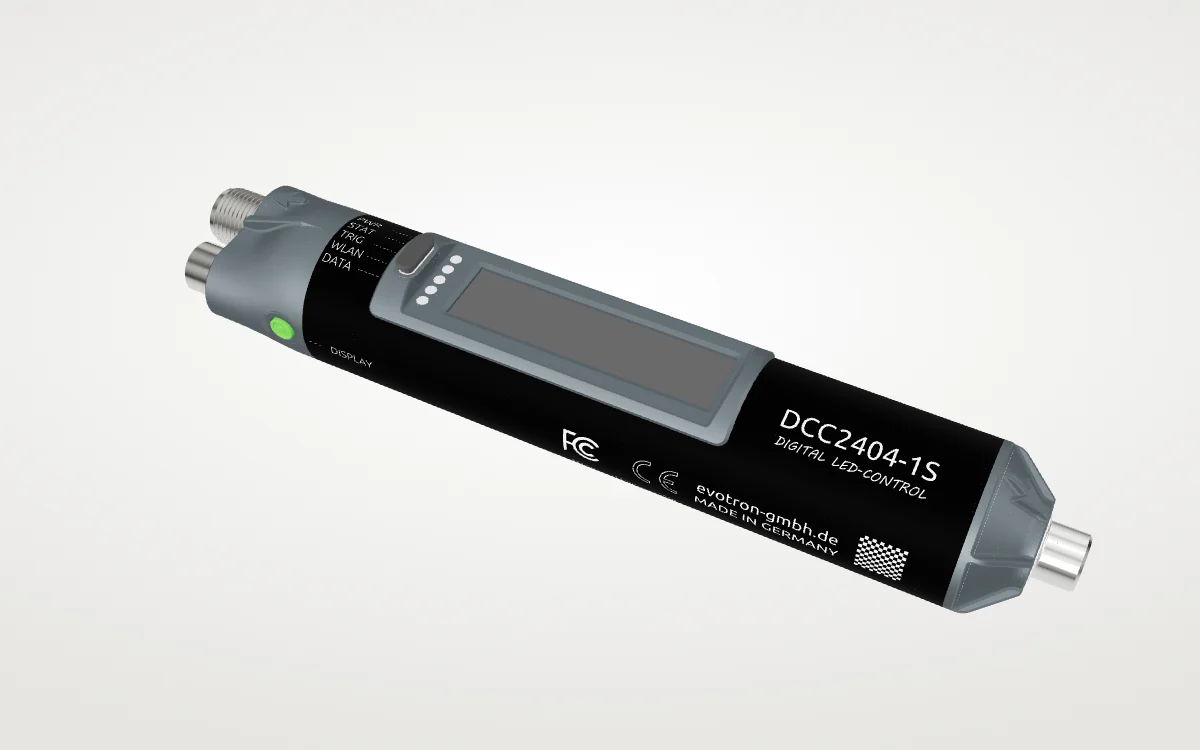
Telecentric lights support all lumiSENS® features. Also available: line and three-side lights, and custom designs.
The lumiSENS® platform keeps growing. Tell us what your application needs, and we will let you know as soon as new products are available.
evotron in-cable controllers also drive LED lighting from other manufacturers. Timing, app and overload protection work right away. All other lumiSENS functions, such as sequences and sensor data, need lumiSENS® lighting.
| Feature | Third-party LED light | lumiSENS® lighting |
|---|---|---|
| Precise flash timing, app, API | ✓ | ✓ |
| User current limits, overload protection | ✓ | ✓ |
| Save and copy parameter sets | ✓ | ✓ |
| Auto compensation against drift and aging | – | ✓ |
| Digital nameplate, Plug & Play | – | ✓ |
| Temperature, irradiance, remaining lifetime | – | ✓ |
| Sequences, segments and colors from one single-channel controller | – | ✓ |
Lighting defines what a camera can see. Our training and consulting connect machine vision, automation and industrial IoT, from the basics to your specific application.
“Image processing begins with light.”Taught by a practitioner in machine vision since 1988, author of the “Lexikon der industriellen Bildverarbeitung” and co-author of the “Handbook of Machine Vision”.
lumiSENS® is evotron's patent-pending, fully digital technology platform for machine vision lighting. A lumiSENS® module in every light measures voltage, current, temperature and light intensity. A digital in-cable LED controller uses this data to keep brightness and flash timing constant over temperature and lifetime, and provides operational data for automation, condition monitoring and industrial AI.
The evotron range includes ring lights, area lights including an RGB version, line lights, spot lights, telecentric lights and three- and four-side lights, in standard wavelengths from 440 nm to 950 nm and white. Other wavelengths, beam angles and custom designs are available on request. The in-cable LED controllers also drive LED lights from other manufacturers.
Yes. The in-cable controllers drive LED lights from other manufacturers within their power class. Timing, app control and user current limits are available. Sequences, auto compensation, the digital nameplate and lifetime data require lumiSENS® lighting.
Three industrial I/O channels can be configured as PNP, NPN, push-pull or input, for trigger, status and user signals. Trigger inputs accept TTL to 24 V. For software integration, a documented JSON REST API and a C++ API are available on request.
For the DCC2404-1WS, yes: it is configured with the DCConfig app for Windows and Linux, which makes set-up, sequences and monitoring fast. The compact DCS2402-1S can be set directly on the device.
The controller detects the new light automatically. With a lumiSENS® light of the same type it calibrates brightness to the stored values, so the machine continues with identical parameters and no new teach-in is needed.
Directly in the lighting cable, in the cable duct, on the wall or on a NS15 or NS35 DIN rail in the control cabinet. Connectors on both sides use standard M8 or M12 cables, also drag-chain or robot-suitable types.
Yes. Below the factory limits you can set your own maximum current. This protects people in the working area from glare, and LED lights from other manufacturers from overload.
Yes. Test devices are available for loan. Request one below and let us know about your application.
Request a test device, a sample or a quote. We will get back to you personally.
Prefer to talk? +49 3681 807 64 60 · info@evotron-gmbh.de
Your request is on its way to evotron. We will get back to you personally.
Talk directly to the people who develop lumiSENS®.
Call+49 3681 807 64 60 Emailinfo@evotron-gmbh.de